

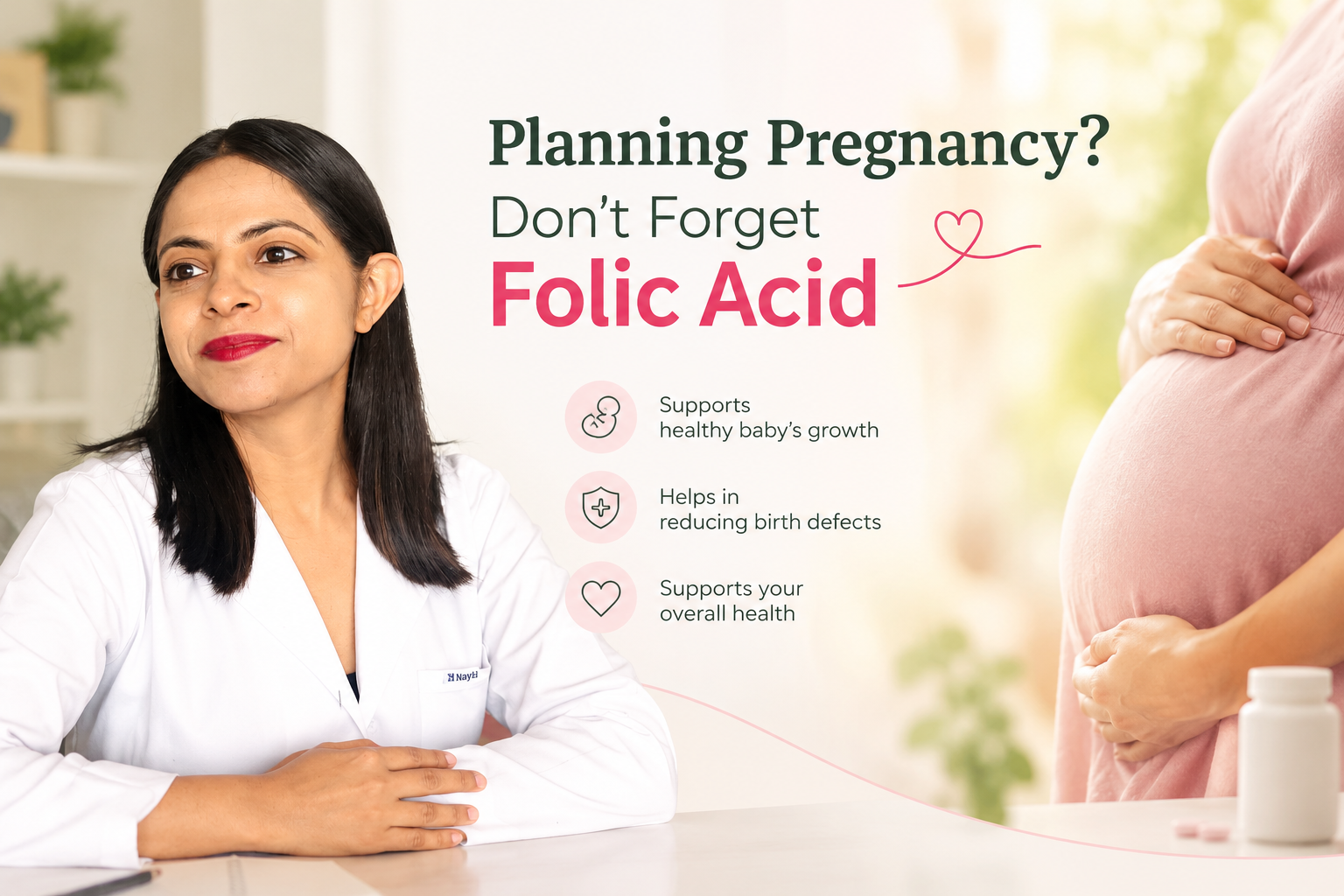
Planning a baby is an exciting phase of life. There may be a lot on your mind, from eating healthier and getting your health checked to preparing for the changes ahead. But there is one small step you should not overlook: taking folic acid before pregnancy.
Folic acid is a form of vitamin B9 that helps your body make new cells. More importantly, getting enough folic acid before conception and during early pregnancy helps reduce the risk of neural tube defects, which affect the baby’s developing brain and spinal cord.
Here’s what makes the timing so important: this early development begins within the first few weeks of pregnancy, often before you even know you’re expecting.
So, if you’re planning to start a family, let’s look at when to take folic acid, how much you may need and what else you can do to prepare for pregnancy.
Why Is Folic Acid So Important Before Pregnancy?
Think of the first few weeks of pregnancy as a period of rapid development. Even before a pregnancy test turns positive, your baby’s early development may already be underway.
During this time, the neural tube develops and eventually forms the brain and spinal cord. Adequate folic acid helps support this process and reduces the risk of neural tube defects, including spina bifida.
That’s why waiting until you confirm your pregnancy may mean missing part of this important window.
Starting folic acid before conception helps ensure that your body has the recommended amount available when it is needed most.
When Should You Start Taking Folic Acid?
The best time to start is before you become pregnant, not after you see a positive pregnancy test.
For most women planning pregnancy, the general recommendation is to:
- Take 400 micrograms (mcg) of folic acid daily.
- Start at least one month before trying to conceive.
- Continue through the first 12 weeks of pregnancy.
Why start so early? Because pregnancy can happen before you expect it, and the neural tube begins developing very early.
If you’re already trying to conceive and haven’t started taking folic acid, there’s no need to panic. Speak with your healthcare professional and discuss starting supplementation as soon as possible.
How Much Folic Acid Do You Need?
For most women, 400 mcg daily is the commonly recommended amount before pregnancy and during early pregnancy.
However, the right dose isn’t the same for everyone. Certain medical conditions, previous pregnancy outcomes and medicines can affect the advice your doctor gives you.
A higher dose may be recommended for some women with specific risk factors, including a previous pregnancy affected by a neural tube defect. This should be determined by a healthcare professional.
A few things to remember:
- Don’t assume that a higher dose will provide greater benefits.
- Check the folic acid content of your supplements to avoid accidentally doubling up.
- Tell your doctor about any medicines, vitamins or other supplements you take.
A pre-pregnancy consultation can help you understand which supplements are suitable for your individual needs.
Folate vs Folic Acid: Are They the Same?
You may have seen both terms on food labels, supplement bottles or pregnancy websites. They are related, but there is a difference.
Folate is vitamin B9 found naturally in foods such as leafy green vegetables, beans and lentils.
Folic acid is a form of vitamin B9 used in supplements and fortified foods.
Both contribute to your nutritional intake, but folic acid is particularly important because it is the form proven to help prevent neural tube defects when taken before pregnancy and during early pregnancy.
This is why eating well is important, but relying on food alone may not provide the recommended amount needed for prevention.
Can You Get Enough Folate From Food?
Absolutely, food plays an important role in pregnancy preparation. The good news is that adding folate-rich foods to your everyday meals doesn’t have to be complicated.
Here are a few options to include in your diet:
- Green leafy vegetables: Spinach and other leafy greens.
- Beans and lentils: Chickpeas, kidney beans and lentils.
- Citrus fruits: Oranges and other citrus fruits.
- Nuts: Peanuts and other nuts.
- Fortified foods: Certain breakfast cereals, breads and grains with added folic acid.
You don’t need to overhaul your entire diet overnight. Start with balanced meals and a variety of nutritious foods.
However, even with a healthy diet, a folic acid supplement is generally recommended when planning pregnancy. Think of good nutrition and supplementation as complementary steps, not alternatives to each other.
Who May Need Extra Attention Before Pregnancy?
While most women can follow the standard recommendation, some may need additional guidance based on their health history.
Your doctor may recommend a different folic acid dose if you have certain risk factors, such as:
- A previous pregnancy affected by a neural tube defect.
- Diabetes or certain blood disorders.
- Medicines that interfere with folate metabolism, including some anti-seizure medicines.
- Other relevant medical conditions or pregnancy complications.
This is one reason a pre-pregnancy consultation can be useful. It gives you an opportunity to discuss your health history, review your medicines and understand what you may need before conception.
If you have a long-term condition, don’t wait until you become pregnant to discuss it with your doctor. Some conditions and medicines need to be reviewed in advance.

What Else Should You Do When Planning a Pregnancy?
Folic acid is an important first step, but preparing for pregnancy involves more than taking one supplement.
A few other things deserve your attention.
- Review your existing health conditions
Conditions such as thyroid disorders and diabetes may require appropriate management before pregnancy. Discuss your health history with your doctor.
- Check your medicines and supplements
Some medicines may need to be reviewed before conception. Never stop a prescribed medicine on your own.
- Focus on everyday nutrition
Aim for balanced meals, adequate nutrition and healthy lifestyle habits. Your doctor can advise you if you have specific dietary needs.
- Review vaccinations and health checks
Your doctor can assess your vaccination history and determine whether any tests or screenings are appropriate before pregnancy.
- Discuss previous pregnancy or fertility concerns
If you’ve experienced pregnancy complications, have irregular periods or are concerned about your fertility, bring these up during your consultation.
The aim isn’t to worry about every possible problem. It’s to understand your health needs early, so you can make informed decisions.
What If You Find Out You’re Already Pregnant?
First, take a breath. If you discover your pregnancy before starting folic acid, don’t panic.
Contact your healthcare professional and discuss starting supplementation as soon as possible. Folic acid remains important during early pregnancy, even though some early development may already have occurred.
Your doctor can guide you on the appropriate dose, review any existing medicines and explain the next steps in your antenatal care.
You don’t need to figure everything out at once. Start by getting the right advice for your situation.
When Should You Consult a Gynecologist?
You don’t have to wait for a positive pregnancy test to speak with a gynecologist. In fact, discussing your health before trying to conceive can help you understand what to expect and which preparations may be appropriate.
Consider scheduling a consultation if you:
- Are planning a pregnancy and want to know which supplements to take.
- Have an existing medical condition or take regular medicines.
- Have experienced previous pregnancy complications.
- Have irregular periods or concerns about fertility.
- Are unsure about the right folic acid dose.
Women looking for a pre-pregnancy consultation in Noida can discuss their reproductive health, medical history and pregnancy preparation with a qualified gynecologist.
At RE-FORMe Clinic, Sector 75, Noida, Dr. Nayya Saini offers gynaecology and pregnancy-related consultations to help women understand their health needs before and during pregnancy.
Preparing for Pregnancy? Start With Small Steps.
Getting ready for pregnancy doesn’t mean having every detail figured out from day one. Sometimes, it’s about understanding the small steps that can make a meaningful difference to your health and your baby’s development.
Starting folic acid at the recommended time, eating a balanced diet, maintaining healthy habits and discussing your medical history with a doctor are practical ways to prepare for pregnancy. These steps can help you understand your nutritional needs and address any health concerns before conception.
If you’re planning a baby, a pre-pregnancy consultation can help you learn about the recommended folic acid dosage, review any existing health conditions and understand which supplements or tests may be appropriate for you. Since every woman’s health needs are different, guidance from a qualified gynaecologist can help you prepare with greater confidence.
Women planning a pregnancy in Sector 75 and nearby areas, including Sectors 72, 73, 74 and 76 in Noida, can consult Dr. Nayya Saini at RE-FORMe Clinic. The consultation offers an opportunity to discuss pregnancy planning, clarify questions about folic acid and receive guidance based on your individual health needs.
Frequently Asked Questions
1. Why should I take folic acid before pregnancy?
Folic acid helps reduce the risk of neural tube defects affecting the baby’s developing brain and spinal cord. Starting before conception is important because this development begins very early in pregnancy.
2. How much folic acid should I take before pregnancy?
For most women, 400 mcg daily is recommended, starting at least one month before conception and continuing through the first 12 weeks of pregnancy. Some women may need a different dose based on their medical history.
3. Can I get enough folic acid from food?
Foods such as leafy green vegetables, beans, lentils and fortified cereals provide folate or folic acid. However, a supplement containing folic acid is generally recommended when planning pregnancy because food alone may not reliably provide the amount needed to reduce neural tube defect risk.
4. What if I forgot to take folic acid before becoming pregnant?
Don’t panic. Speak with your healthcare professional and discuss starting supplementation as soon as possible. Your doctor can recommend the appropriate dose and explain other early pregnancy requirements.
5. Does folic acid improve fertility?
Folic acid is important for pregnancy preparation and early fetal development, but it is not an established treatment for infertility. If you’re having difficulty conceiving, a fertility evaluation may help identify possible causes.
6. When should I see a gynecologist for pregnancy planning?
You can consult a gynecologist before trying to conceive to discuss folic acid, existing medical conditions, medicines, nutrition and any recommended health checks. This can help you prepare for pregnancy with a clearer understanding of your individual needs.